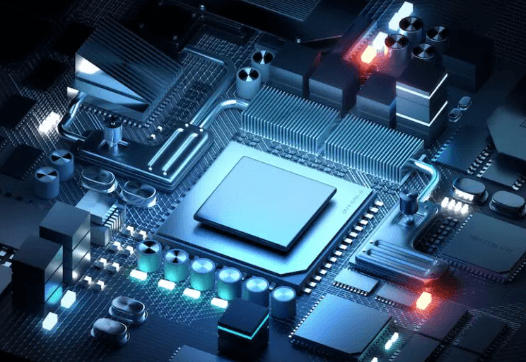
The future of high-speed processors envisions ultra-dense, modular cores and novel cooling. Advances in lithography shrink footprints while boosting yield and efficiency. AI-enabled, heterogenous architectures merge with new materials to adapt to workloads in real time. Evaluation will blend real-job profiles with sustained throughput, unveiling tradeoffs in memory bandwidth, caches, and fabrics. As scalable, resilient paths emerge, the next decade promises transformative gains—and questions about reliability and integration endure, inviting further examination.
What Will High-Speed Processors Look Like Next Decade
What will high-speed processors look like next decade? The analysis projects ultra-dense cores, cooled by novel methods, with modular fabrics enabling scalable diversity. Future lithography advances shrink footprints while boosting yield, unlocking transformative performance per watt. Quantum inspired design informs error-tolerant architectures, dynamic precision scaling, and probabilistic computing paths. Data-driven forecasts emphasize freedom through adaptable, open ecosystems, accelerating innovation and autonomous optimization.
How Integration, AI, and New Materials Reshape Performance
Integration, AI, and new materials are converging to redefine processor performance by compounding gains across compute density, adaptability, and energy efficiency.
The narrative surveys integration challenges and material breakthroughs, framing a future where heterogeneous architectures enable adaptive workloads.
Data-driven projections suggest modular stacks accelerate innovation, while designers pursue reliability, manufacturability, and scalable performance as freedom-driven seekers illuminate uncharted computational frontiers.
Why Energy Efficiency and Cooling Matter for Scalable Systems
Energy efficiency and effective cooling are pivotal to scalable systems as workloads diversify and compute demand intensifies. In this vision, energy density defines architectural ambition, while thermal throttling reveals system limits and prompts adaptive design.
Scalable systems rely on sustained energy efficiency, enabling resilient performance, modular growth, and freedom to pursue ambitious workloads under evolving thermal landscapes with data-driven confidence.
How to Evaluate Future CPUS and Accelerators for Real Workloads
Evaluating future CPUs and accelerators for real workloads requires a forward-looking framework that translates architectural intent into measurable impact. The analysis blends CPU benchmarks with real-job profiles, emphasizing sustained throughput, latency, and resilience. Data-driven projections weigh memory bandwidth against cache hierarchies, interconnects, and fabric efficiency. Visionaries seek scalable performance guarantees, balancing innovation pace with workload realism to guide investment and design choices.
See also: The Future of Holographic Technology
Frequently Asked Questions
How Will Software Ecosystems Adapt to Future Processor Architectures?
Software ecosystems will adapt through modular optimization strategies, prioritizing portability, reliability concerns, and energy efficiency, while embracing speculative architectures. This data-driven vision envisions cross-platform tooling, autonomous optimization, and freedom-loving developers aligning with evolving hardware capabilities and constraints.
What Are the Ethical Implications of Faster AI Hardware?
Visionary voices view faster AI hardware amplifying ethical concerns, urging robust hardware governance, transparent metrics, and steadfast industry standards; data-driven analyses suggest software paradigms evolve, balancing freedom with safeguards, while stakeholders assess societal impact and responsible innovation.
Can Quantum or Neuromorphic Tech Outperform CMOS in Practice Soon?
Quantum or neuromorphic tech may surpass CMOS in practice soon, with quantum supremacy framed as an accelerating benchmark and neuromorphic practicality guiding energy-aware, parallel architectures; outcomes remain data-driven, visionary, and oriented toward unfettered exploration of computational freedom.
How Will Vendors Handle Supply Chain Risks for Advanced CPUS?
Vendors will pursue supply chain resilience through proactive risk mapping and diversified sourcing, while investing in modular ecosystems. Data-driven scenarios forecast disruptions and recovery times, prompting vendor diversification, strategic stockpiles, and collaborative resilience programs for freedom-loving stakeholders.
What Are Hidden Costs of Adopting New High-Speed Processors?
Hidden costs emerge as institutions confront implementation barriers, supply chain risks, and evolving procurement strategies; data-driven forecasts reveal trade-offs, while visionary analysis imagines freedom-driven adoption, balancing upfront investments with long-term efficiency, resilience, and liberated innovation beyond conventional processor paradigms.
Conclusion
The trajectory of high-speed processors points toward ultra-dine architectures that blend modular cores, AI-driven optimization, and novel cooling to sustain escalating workloads. In this framing, lithography advances shrink footprints while enhancing yield and throughput per watt, and heterogeneous stacks enable adaptive, real-time resource allocation. A striking stat: energy efficiency gains of 3–5x over the next decade could accompany a 2–3x increase in sustained performance. Data-driven design will steer memory bandwidth and fabric efficiency for scalable, resilient systems.